


Key takeaways
- Cheap intelligence works best for predictable, high-volume tasks
- Superior intelligence pays off when better reasoning reduces costly errors and risk
- AI model selection should optimize cost per successful outcome, not tokens alone
- AI model routing matches simple tasks with efficient models and complex tasks with stronger ones
- The best enterprise AI strategy balances cost, quality, speed, risk, and business value
Is cheap intelligence more important than superior intelligence?
The debate around AI model selection has moved beyond benchmark leaderboards to a more important question: How much intelligence does an enterprise actually need for each task? The answer is not “always choose cheap” or “always choose the smartest.” The better strategy is intelligence efficiency: achieving the required business outcome at the lowest acceptable cost, risk, and latency through scalable enterprise Generative AI solutions.
Stanford's 2025 AI Index found that the cost of comparable AI model performance fell by more than 280x from 2022 to 2024. The report also showed that smaller models can now achieve performance levels once associated with much larger models. The enterprise implication is clear: model size and price alone are becoming weaker proxies for enterprise value. Organizations must now match exact workload demands to the most efficient model rather than defaulting to frontier specs for every routine operation.
What do we mean by 'cheap intelligence' in enterprise AI?
In enterprise AI, the term generally describes small language models, distilled models, specialized models, open-weight models, and lower-cost commercial models that can reliably perform defined tasks without frontier-level reasoning.
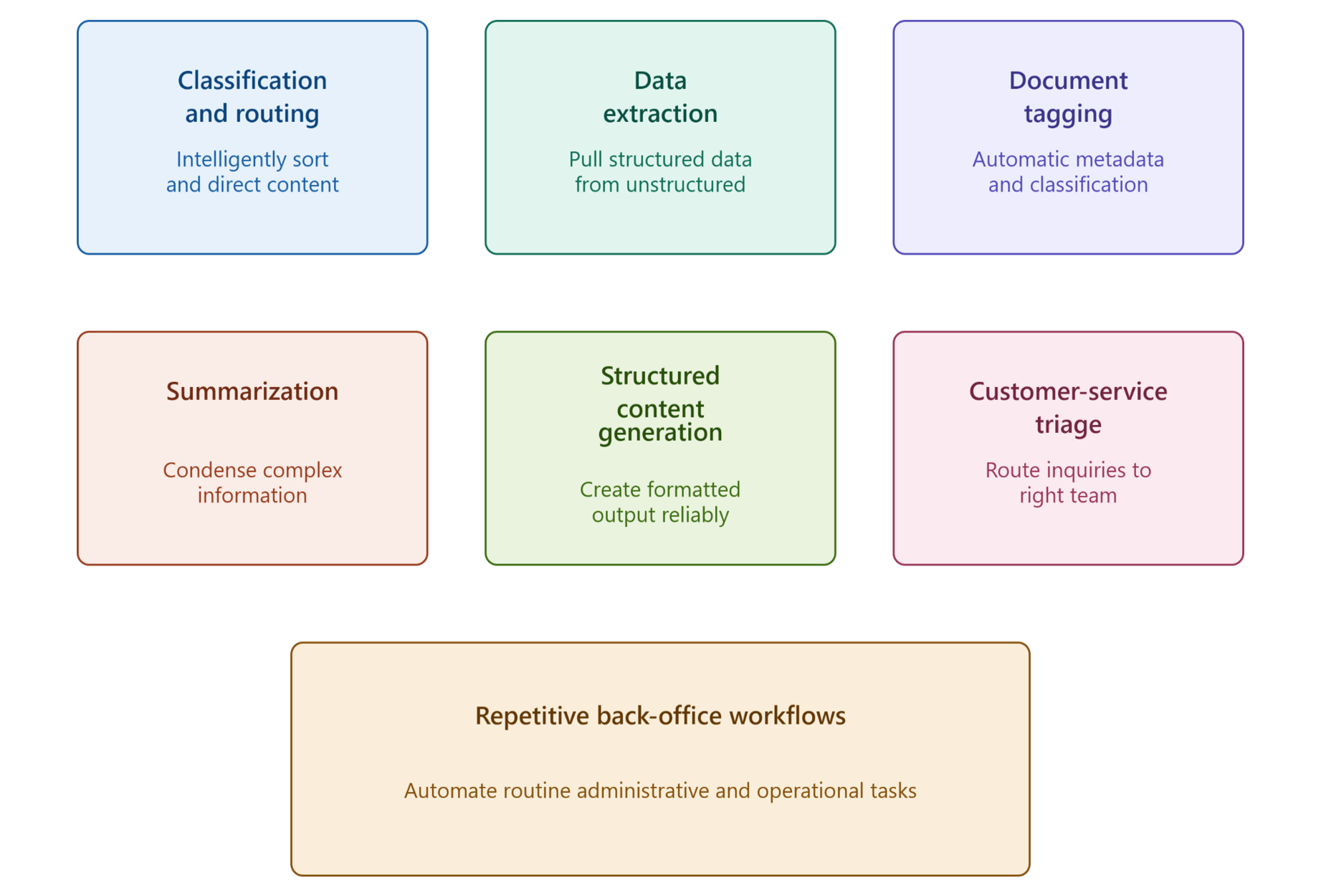
The principle is simple:
The most effective model is the one that meets the required quality, latency, security, and risk threshold at the lowest acceptable total cost.
How does AI cost versus performance affect enterprise economics?
AI cost versus performance cannot be judged by token price alone.
True AI workflow cost = Model cost + retries + tool calls + human review + latency + failure recovery
A $1 model is not cheaper than a $3 model if it frequently fails and creates additional work. A stronger enterprise metric is:
Cost per successful outcome = Total AI workflow cost ÷ successful business outcomes
This captures inference, orchestration, retries, human intervention, and operational overhead.
Factor | Cheap or small models | Superior or frontier models |
Typically effective for | Predictable, high-volume work | Complex, ambiguous work |
Cost efficiency | Usually high | Usually lower |
Reasoning | Task-specific | Advanced |
Latency | Often lower | Can be higher |
Examples | Extraction, classification, routing | Research, coding, complex analysis |
Typical fit | Lower-risk workloads | High-value or high-risk workloads |
The objective is not to eliminate premium models. It is to avoid paying for intelligence that a workload does not require.
Why is AI cost optimization critical at enterprise scale?
Lower model prices do not automatically lower enterprise AI spending.
Cheaper inference can make previously uneconomic workloads viable, encouraging more automation, agents, and token consumption, making proper cloud cost optimization strategies essential for keeping infrastructure balanced.
McKinsey’s 2026 survey found that enterprise LLM spending tripled and 93% of teams exceeded budgets, driven by response refinement loops consuming 60% of agentic AI costs.
The pattern is predictable: cheaper models enable new use cases → more automation → more token consumption → budgets spike despite lower per-token costs. Without active cost governance, efficiency gains disappear.
As enterprises deploy more autonomous and agentic workflows, cost governance also needs to extend to how AI systems are authorized, monitored, and controlled. Learn how autonomous AI systems can be governed as they take on more independent actions.
This is where routing and model selection discipline become critical. Enterprises that implement intelligent routing and workload-specific model matching typically cut AI costs per outcome by 30-45% while improving reliability.
What does AI cost optimization actually involve?
Effective AI cost optimization includes:
- Selecting the right model for each task
- Reducing unnecessary context
- Controlling output length
- Managing agent loops and retries
- Using caching and batching
- Evaluating open-weight models
- Monitoring cost against business outcomes
- Implementing LLMOps & model governance
The goal is not the cheapest inference. The goal is the lowest total cost for a reliable outcome.
How does AI model routing work?
AI model routing dynamically selects a model based on task complexity, quality requirements, cost, latency, and risk.
A typical strategy is:
- Simple → Small model → Validate → Complete
- Moderate → Mid-tier model → Validate → Complete or escalate
- Complex → Frontier model → Advanced reasoning → Complete
For example, a customer-service system could use a lightweight model to classify thousands of tickets while sending policy-sensitive escalations to a stronger model.
Amazon Web Services reports that Amazon Bedrock Intelligent Prompt Routing achieved average cost savings of 35% for the Nova family and up to 56% for the Anthropic family in internal testing, while maintaining comparable response quality. Results vary by workload, prompt complexity, and routing configuration, making empirical testing essential before production deployment.
Routing is not automatically cheaper. The routing layer introduces overhead, and poor routing can increase latency or reduce quality. Enterprises should therefore measure routing against a defined quality baseline.
When should an enterprise choose a cheaper AI model?
Choose a lower-cost model when the workload has:
- High volume
- Predictable inputs
- Clear output requirements
- Limited failure impact
- A narrow task definition
- Strong evaluation results
Examples include invoice extraction, ticket classification, customer-intent detection, and structured data transformation.
Choose cheap intelligence when sufficient capability is available at materially lower cost.
A cheap model that fails the required quality threshold, however, is not an efficient model.
When does superior AI model performance justify higher cost?
Superior AI model performance becomes economically rational when failure is expensive.
Executives should ask:
- What does an incorrect answer cost?
- Does the output affect revenue, compliance, or customer experience?
- How much human review follows?
- Does stronger reasoning improve task completion?
- Can the stronger model eliminate downstream work?
A frontier model may justify its premium for complex software engineering, scientific research, financial analysis, high-value decision support, or multi-tool agent planning. As AI takes on a larger role in software development, understanding how these models are reshaping developer responsibilities becomes increasingly important.
Premium model value = Incremental business value − Incremental AI cost
If additional reasoning creates more value than its additional cost and risk, superior intelligence wins.
What is the best AI model comparison framework for enterprises?
Do not begin with a leaderboard. Begin with the business outcome.
Evaluate models across:
Dimension | What to measure |
Quality | Accuracy, reasoning, reliability, completion |
Economics | Cost per task and successful outcome |
Operations | Latency, throughput, scalability |
Risk | Security, privacy, compliance, governance |
Business value | Revenue, productivity, experience, failure cost |
Public benchmarks can create a shortlist. Production-like workloads should make the final decision.
How should enterprises choose the right AI model?
- Define the business outcome.
- Set the minimum quality threshold.
- Classify complexity and risk.
- Estimate volume, latency, and total cost.
- Test multiple models on representative data.
- Measure cost per successful outcome.
- Add routing where model specialization creates value.
- Continuously monitor quality, cost, and failures.
This turns AI model selection into a continuous optimization discipline rather than a one-time procurement decision.
What is the best enterprise AI strategy?
The strongest enterprise AI strategy is not built around one model.
It uses a flexible intelligence layer:
Applications → AI orchestration → Model routing → Small / mid-tier / frontier models → Evaluation → Monitoring → Optimization
This enables enterprises to:
- Route routine workloads to lower-cost models.
- Reserve advanced models for complex reasoning.
- Change models as pricing and capabilities evolve.
- Reduce provider dependency.
- Balance performance and AI cost.
- Deploy enterprise AI agents and evaluate outcomes.
For sensitive workloads, model selection must also consider data residency, privacy, security, auditability, provider dependency, and human oversight.
The cheapest model is not the right model if it creates unacceptable enterprise risk.
Cheap intelligence or superior intelligence?
Cheap intelligence becomes sufficient when capability is available at a fraction of the cost. Superior intelligence wins when additional reasoning creates measurable business value. The strategic advantage belongs to enterprises that can make that decision workload by workload. The goal is not to buy the cheapest intelligence or the most intelligent model.
The goal is to achieve the required business outcome with the right level of intelligence, at the lowest acceptable total cost and risk.
That is intelligence efficiency.
The future of enterprise AI will not belong to organizations that use the smartest model everywhere. It will belong to organizations that know where superior intelligence creates value, where cheaper intelligence is enough, and how to move between the two without compromising quality, security, or business outcomes.
Enterprise AI cost optimization is not about choosing cheap models. It's about choosing the right model for each workflow, at the right cost, with the right reliability.
Three things separate organizations that achieve this from those that don't:
- Honest evaluation: Testing your models against production workflows, not just public benchmarks
- Disciplined routing: Implementing intelligent model selection based on task complexity, not deployment convenience
- Continuous optimization: Monitoring cost-per-outcome as models and pricing evolve, not treating model selection as a one-time decision
Enterprise AI embeds all three into your architecture by providing: workload analysis and cost audits, evaluation frameworks and model testing infrastructure, intelligent routing design and implementation, continuous benchmarking and cost governance.
The result: enterprises typically reduce AI costs per outcome by 30-45% while improving reliability and compliance.
Related: Learn how enterprises scale AI cost optimization as part of broader digital transformation: Digital Engineering & Scalable AI Transformation