


The change that will change how we do QA
Testers have all been heading in the same direction, the use of artificial intelligence tools. We’re excited about the speed of releases, mostly covered, and manual work.The real question, though, is do artificial intelligence testing tools actually improve software quality or are they just a tool for faster releases?We’ve spent a ton of time debugging flaky automated test suites. We found that the answer was no, automation was not the nectar of intelligence. It was a cure-all for quality.Automation is a flavour of speed and consistency. Intelligence is a flavour of doing things. From automating our tests to having independent tests.Artificial intelligence automation is changing how we do things. It’s changing testing speed and flexibility and reducing the human work required for repetitive testing. 80 percent of all software tests will be done by artificial intelligence by 2028. This is a change in the way the teams think about testing.
What can help teams change?
In legacy automation, a human creates a script, the script runs and when the application changes, the script fails, and then a human has to patch it.
But the tools to test autonomously now are combining all these capabilities that contribute to their “my” in various respects. So first let’s get an intuition of what can. help. Transition to. autonomy?
1: Understand the real problem
You can change things with each release. But not all of them are equally resistant. Agentic artificial intelligence models the differences between code builds, UI changes, API schema changes, and previous failure results, to answer a specific question: What will fail this time? Lowering the number of dumb test runs
2: It creates test scenarios, not test cases
It doesn’t run the same scripts; it creates scenarios based on behaviour. New flows can be. As dependencies change, you get whole new test paths, automatically; no need to wait until someone issues all of them manually.
3: It knows what to run
It does not run randomly. Agentic systems run the tests that matter, the ones with risk and with evident patterns of repeated failure. It does the high-risk cases first. It doesn’t do the low-value verification steps at all. This is useful in the scenario of continuous integration and continuous deployment where we care more about time than coverage.
4: It can self-heal if needed
Things change, APIs and selectors change, and flows get refactored. The agentic artificial intelligence tries to figure out why it broke and then tries to fix the test if it can. It will also tell the test writer if it can’t, using the same reporting – logs and error messages – as a forced stop.
5: Learning from outcomes
This is the one you can get lazy about. You shouldn’t. The agentic artificial intelligence, in addition to missed bugs, learns from test outcomes and production issues. It will improve over time in determining which tests are worth doing and which are noise.
Best practices to adopt autonomous software testing
I have heard a bunch of teams describe autonomous testing as “tool rollout.” This is actually a big change to how you plan your tests, how you run your tests, and how you own your tests.
1. The base of the autonomous testing tool is a stable CI/CD pipeline to run your tests
Your tests are modular and reusable. Your data is stored and reliable. An autonomous testing tool makes it incremental by scripting, and the only thing you need is disciplined QA to make it reliable. Without a foundation on which to build, there can’t be scalability.
2. Start with a focused use-case pilot
The best way to test the autonomous testing tool is to do a focused pilot. Pick a feature and something that’s easy to measure. Measure to test that the tool reduces test breakage and the amount of time saved during the pilot. It’s a sanity check, as the tools you see are built for slightly different purposes.
3. Measure the right metrics
Measure the right metrics to help adoptionDemote autonomy but ask easy questions: How much faster can we write and maintain tests? How can we reduce maintenance time? How fast do we find bugs? Restricting autonomy may, on the surface, seem like a primal sin. But it’s also the precise way to shift the focus from “autonomy” to impact in terms of speed, coverage, and effort instead of being impressed by “autonomy” of the tool.
4. Analytics for your suite
Once it’s stable, employ its analytics. That’s the part where autonomous testing outgrows a mere self-healer, because you’ll discover that the system knows which tests are redundant or low-value and which areas of the app should be tested more because of risk. You’re building your suite smarter, not merely a test runner.
5. Build a feedback loop
Autonomous testing requires feedback. You must institute a feedback loop to review failures, analyze logs and iterate the system. This is the part where the simple tool becomes a learning machine. Without a strong one, the machine won’t learn; with a weak one, the tool may be learning “bad things” from bad data.
6. Keep the humans in the loop
Autonomous testing doesn’t replace human QA judgment. It can write and recover, but it doesn’t interpret business risk or impact on the customer.The best thing you can do is treat it like a copilot. It can do the heavy boring parts to lift your head to validation, strategy and high-level decision making.
7. Prepare for a change in QA skill types
Your idea of “good QA” will change with autonomous testing. You won’t need as many folks writing low-level automation code, but you’ll need more folk that can “understand the business”, “read the language of AI”, and “call the shots” of a machine.The skill change is a thing: writing to defining and directing.
Conclusion
Automation changed the game for QA teams. We release better, faster, and more often. But, as we are approaching more complex applications and tighter and tighter release cycles, we have realized that automation of tests is no longer enough. It’s the next step. Autonomous testing is the future of QA. But it is not about testing more. It’s about testing smarter. But autonomous testing is not about replacing QA engineers. AI ca
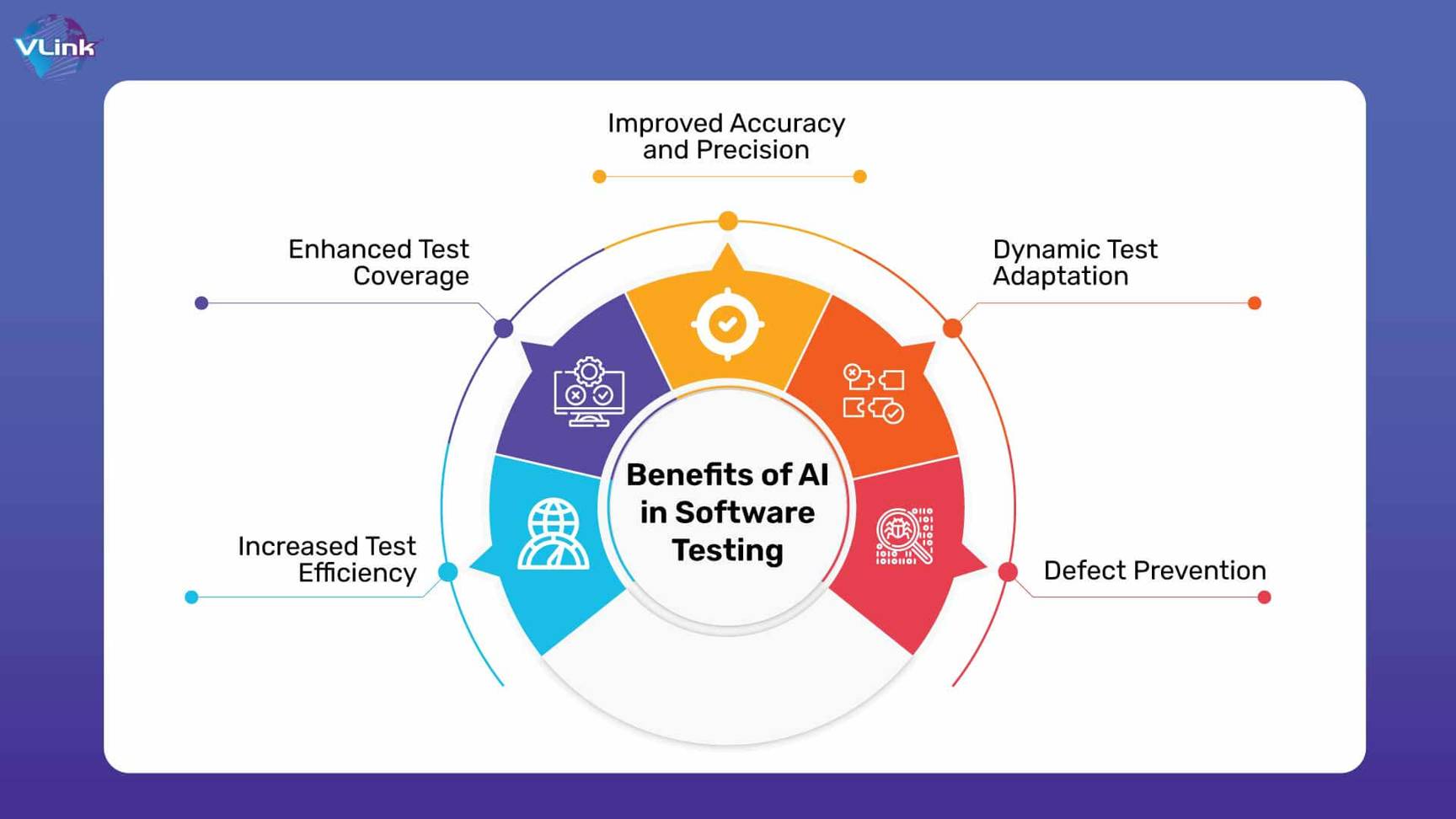
Key benefits of AI adoption in modern software testing and quality assurance.
n interpret patterns, adapt to changes, and reduce the “tire kicking” that happens in test maintenance and management, but AI cannot understand the big picture. It cannot understand business. By combining the strengths of humans and AI, as we see many top QA teams doing, we can leverage AI to deal with repetitive, data-heavy work so that we human test engineers can improve on the higher-level activities such as risk assessment, test strategy, exploratory testing, and ultimately ensuring that the value of quality is realized by our customers.