


If you’ve ever compared your backend conversion numbers with Google Ads and GA4, you’ve probably seen something like this: Google Ads reports 1,000 conversions, GA4 shows only 850, and your backend reports a completely different number. The first reaction is usually that something is wrong with the tracking implementation. But most of the time, your tags aren’t broken. The way browsers handle tracking has changed.
Browser updates like Apple’s Intelligent Tracking Prevention (ITP), stricter privacy laws, cookie consent banners, and ad blockers have made traditional browser-based tracking much less reliable. As a result, businesses are seeing gaps in their data, inconsistent attribution, and reports they don’t fully trust.
To address this, many organizations are moving toward first-party tracking, which gives them more control over how data is collected and shared. Google’s two main solutions are Google Tag Gateway (GTG) and Server-Side Google Tag Manager (sGTM). Both help improve measurement, but they work differently and are designed for different needs.
Why Reliable Measurement Matters More Than Ever
Today, almost every marketing decision is driven by data. Campaign budgets, performance reports, and business decisions all depend on accurate measurement. When tracking becomes incomplete, the impact goes beyond reporting. Campaigns may be optimized using incorrect data, budgets can be misallocated, and leadership loses confidence in the numbers.
The goal today isn’t to collect more data; it’s to collect reliable first-party data that continues to work in a privacy-first world. This is where Google Tag Gateway (GTG) and Server-Side Google Tag Manager (sGTM) come in. Both improve first-party measurement, but they are built for different business needs.
Google Tag Gateway (GTG): A Quick and Simple Fix
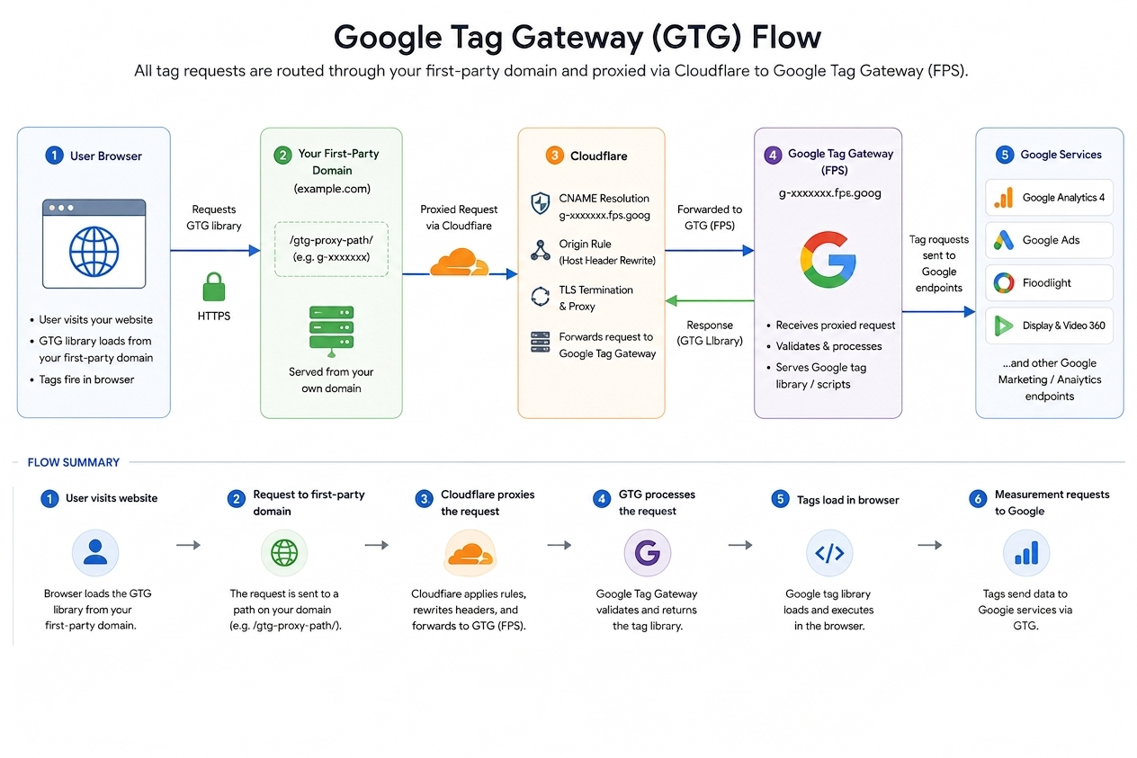
Google Tag Gateway is the easier option. Instead of loading Google Analytics and Google Ads resources directly from Google, they are served through your own domain, such as analytics.yourdomain.com. Because the requests appear to come from your website, they are less likely to be affected by browser restrictions or basic ad blockers.
The biggest advantage is simplicity. Existing tracking implementations require minimal changes, making GTG an attractive option for organizations that primarily rely on Google products.
GTG is a good fit if:
- Primarily use Google Analytics 4 and Google Ads
- Need better measurement with minimal implementation effort
- Want an affordable first-party tracking solution
- Aren’t yet ready to invest in server-side infrastructure
Server-Side GTM (sGTM): Building for Long-Term Growth
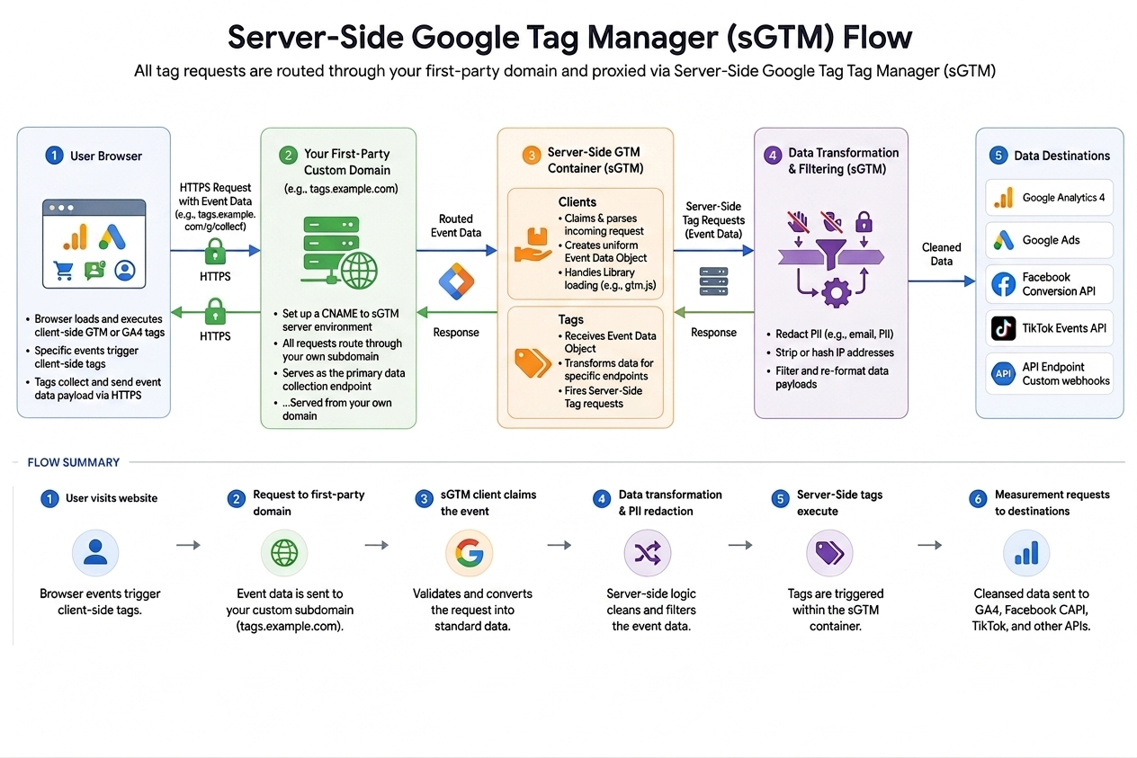
Server-Side GTM takes a different approach. Instead of sending data directly from the browser to different marketing platforms, the data first goes through a server that you control. From there, it can be sent to Google Analytics, Google Ads, Meta, TikTok, LinkedIn, your CRM, or other tools.
Beyond improving measurement, Server-Side GTM helps organizations strengthen privacy compliance, improve data governance, reduce browser-side tracking scripts, and build a scalable foundation for future analytics initiatives.
sGTM is a good fit if:
- Advertise across multiple marketing platforms
- Need greater control over customer data
- Have strict privacy or governance requirements
- Want a scalable analytics architecture for future growth
Quick Comparison:
| Feature | Google Tag Gateway | Server-Side GTM |
| Main Purpose | Routes Google Tag through your own domain | Processes and routes data through your own server |
| Supported Platforms | Google Analytics 4, Floodlight, and Google Ads | Google, Meta, TikTok, LinkedIn, CRM, and more |
| Setup | Simple | Advanced |
| Cost | Low | Cloud hosting costs |
| Best For | Small to medium businesses using Google tools | Businesses needing advanced data control |
Final Thoughts
Privacy-first measurement is no longer a future consideration; it’s today’s reality. Whether you choose Google Tag Gateway or Server-Side GTM, the objective is the same: build a measurement strategy that remains reliable as browsers, privacy regulations, and marketing technologies continue to evolve.
For organizations beginning their first-party measurement journey, Google Tag Gateway offers a quick and practical starting point. For businesses seeking advanced control, cross-platform integrations, and long-term scalability, Server-Side GTM provides a stronger foundation.
The important takeaway is that improving measurement today isn’t about adding more tags; it’s about building a tracking strategy that continues to work as the web evolves.