
The
Night Netflix Refused to Buffer
It’s
2:00 AM.
You’ve
told yourself “just one more episode” at least three times already. But
now it’s the finale. You click Play… and it starts instantly.
No
spinning circle. No loading screen. Nothing.
Just video.
Feels normal, right?
But
here’s the truth: that “instant” moment is one of the most complex illusions in
modern engineering. What you’re seeing is not speed—it’s preparation. A system
that has been working before you even decided to click.
It Starts
Before You Even Open Netflix
When
you open Netflix and see your “Continue Watching” row, you might assume it’s
coming from a database somewhere.
It’s
not.
Behind
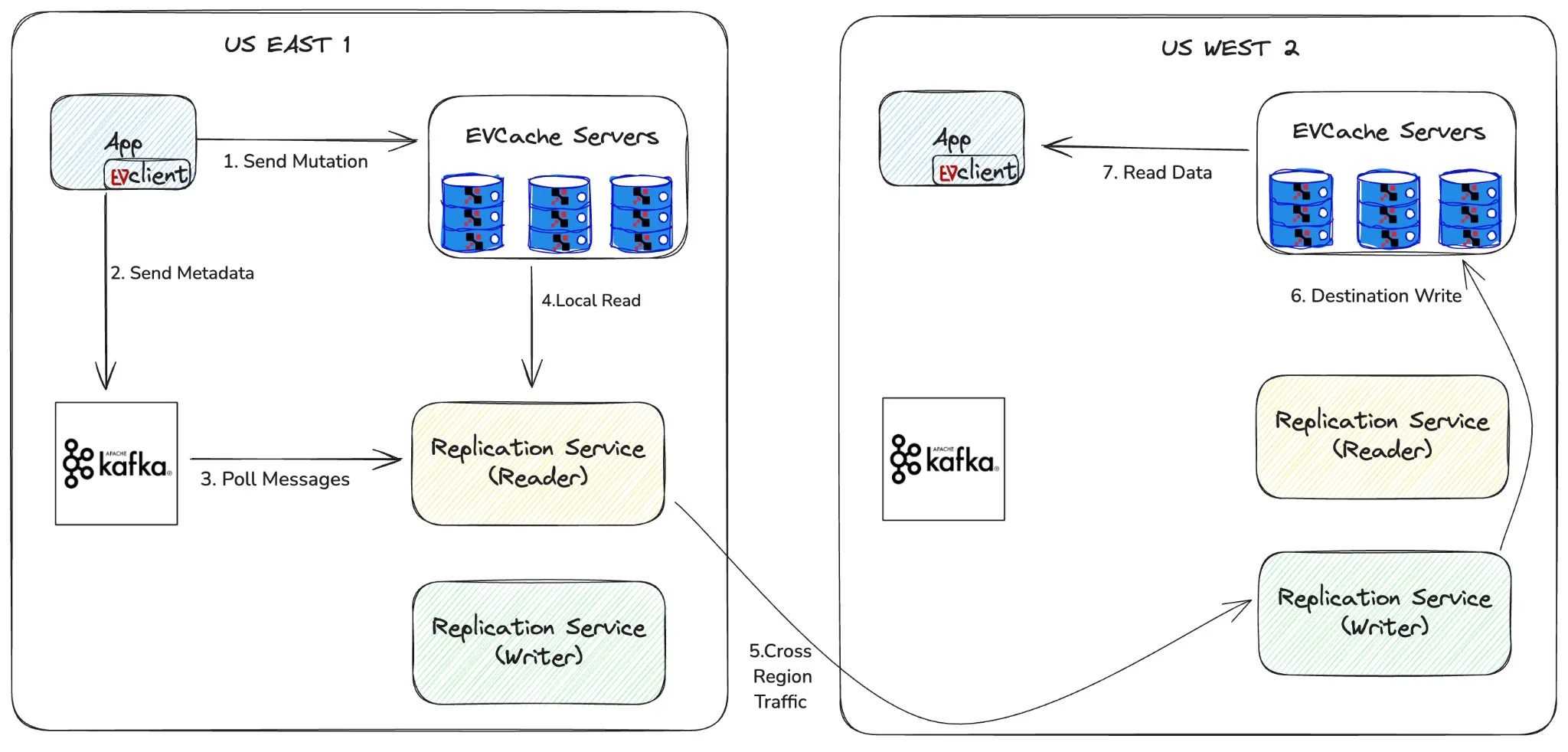
the scenes, Netflix is serving that data from something called EVCache—a
massive, distributed memory layer designed to answer requests in milliseconds.
Because
hitting a database? That’s already too slow. If users ever feel delay, you’ve
already lost them.
So
instead of making databases faster, they asked a better question:
“What
if we never had to hit the database at all?”
The
Problem With Memory: It Forgets
Caching
sounds simple—store data in memory, serve it quickly.
But
at Netflix scale, nothing is simple.
Servers
fail. New ones spin up. Traffic spikes unpredictably.
Now
imagine this:
A new cache server starts— completely empty.
Suddenly,
millions of requests miss the cache and hit the database at once.
Boom.
System collapse.
Netflix had to solve this.
So
they built a quiet, almost invisible mechanism:
- Somewhere,
a warm server continuously replicates its state across a distributed system (built on top of Memcached, via EVCache) - A
new server wakes up, syncs that data through this replication layer, and fills itself before taking
traffic
By
the time it goes live, it already “remembers” everything.
No chaos. No spike. No user ever notices.
But
Memory Isn’t Enough for Movies
Caching
user data is one thing.
But what about a 20GB 4K movie?
You can’t just throw that into RAM.
So
Netflix did something unusual.
Instead
of bringing users closer to servers—
they brought servers closer to users.
The Box
Sitting Inside Your ISP
Netflix
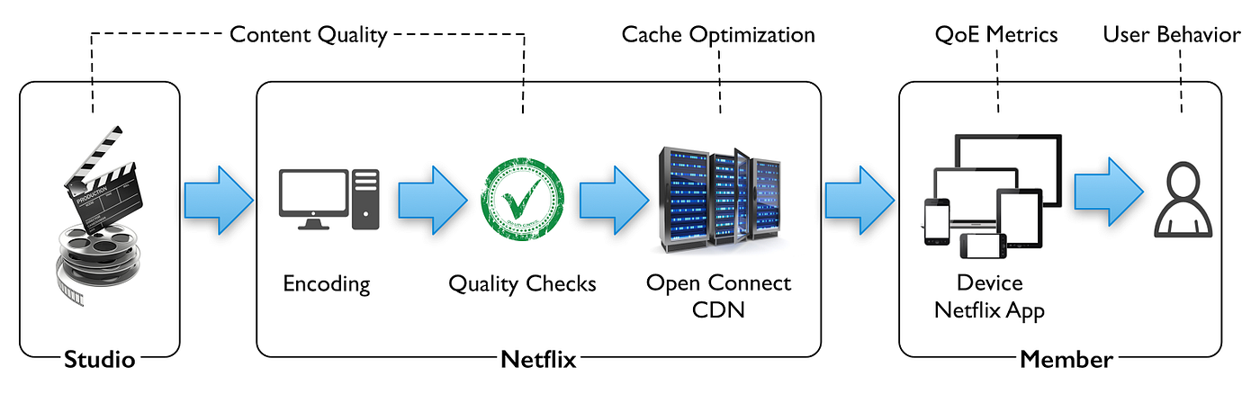
built their own CDN—Open Connect.
But
here’s the twist:
They physically ship servers to ISPs.
Yes,
actual hardware.
These
boxes sit inside your internet provider’s network, just a few miles from your
home.
So
when you hit play, your movie isn’t traveling across continents.
It’s practically next door.
The Final Frontier: Optimizing the OS Kernel
Most
companies optimize applications.
Netflix optimized the operating system.
Normally,
when video data moves:
- It gets copied
- Encrypted
- Passed between layers
- Handled by CPU repeatedly
That’s slow.
So Netflix moved encryption directly into the kernel using kTLS.
It flows straight from disk → network card.
The result?
A single server can stream to thousands of users at once.
While You Sleep, Netflix Is Preparing for You
Every night, something interesting happens.
Netflix studies what people in your region are watching.
Then, quietly…
It pushes that content to local servers near you.
So when you wake up and press play, the video is already there.
Not fetched. Not requested.
Waiting.
The Creepiest Part: Netflix Knows What You’ll Click
Now comes the part that feels almost unfair.
Netflix doesn’t just react to your clicks.
It predicts them.
As you scroll… pause… hover… hesitate…
Their machine learning pipeline is calculating probabilities:
“There’s a 90% chance he clicks this.”
And when that happens?
Netflix doesn’t wait.
It starts loading the video before you click.
- Videos start instantly
- Episodes transition seamlessly
- You never see loading screens
Because you’re always slightly behind what Netflix has already prepared.
The Real Lesson (This Is Where Most Engineers Get It Wrong)
Most developers think like this: “How do I make my backend faster?”
Netflix thinks differently: “How do I make sure the backend is never needed?”
That’s the shift.
That’s the mindset.
That’s why when you hit play at 2:00 AM…
There’s no spinning circle.
Because Netflix already knew you would.