


Introduction
Artificial Intelligence is no longer a future ambition for product teams - it is already shaping how products are imagined, built, monetized, and governed. What stood out across discussions at Product Leaders Day India was not the excitement around AI’s capabilities, but the growing maturity in how leaders are choosing to apply it.
At TO THE NEW, we see this shift as an important inflection point: teams are moving from “Where can we add AI?” to “Where does AI genuinely create value?” The conversations reinforced that successful AI adoption is less about tools and more about judgment, intent, and accountability.
AI as a product co-pilot, not a replacement
One clear pattern that emerged was the evolution of AI’s role in product development. AI is increasingly embedded across the product lifecycle - from research and ideation to delivery and optimization. However, the most effective teams are using AI as a co-pilot, not an autopilot.
AI accelerates research, surfaces insights faster, and reduces manual effort in routine tasks like drafting user stories or analyzing feedback. But product direction, prioritization, and decision-making still remain firmly human responsibilities. Validating AI outputs requires robust quality engineering for AI products, ensuring accuracy, fairness, and reliability.
Key insight: AI amplifies product thinking - it does not replace it. Teams that treat AI as an assistant, rather than an owner, are seeing better outcomes and fewer risks.
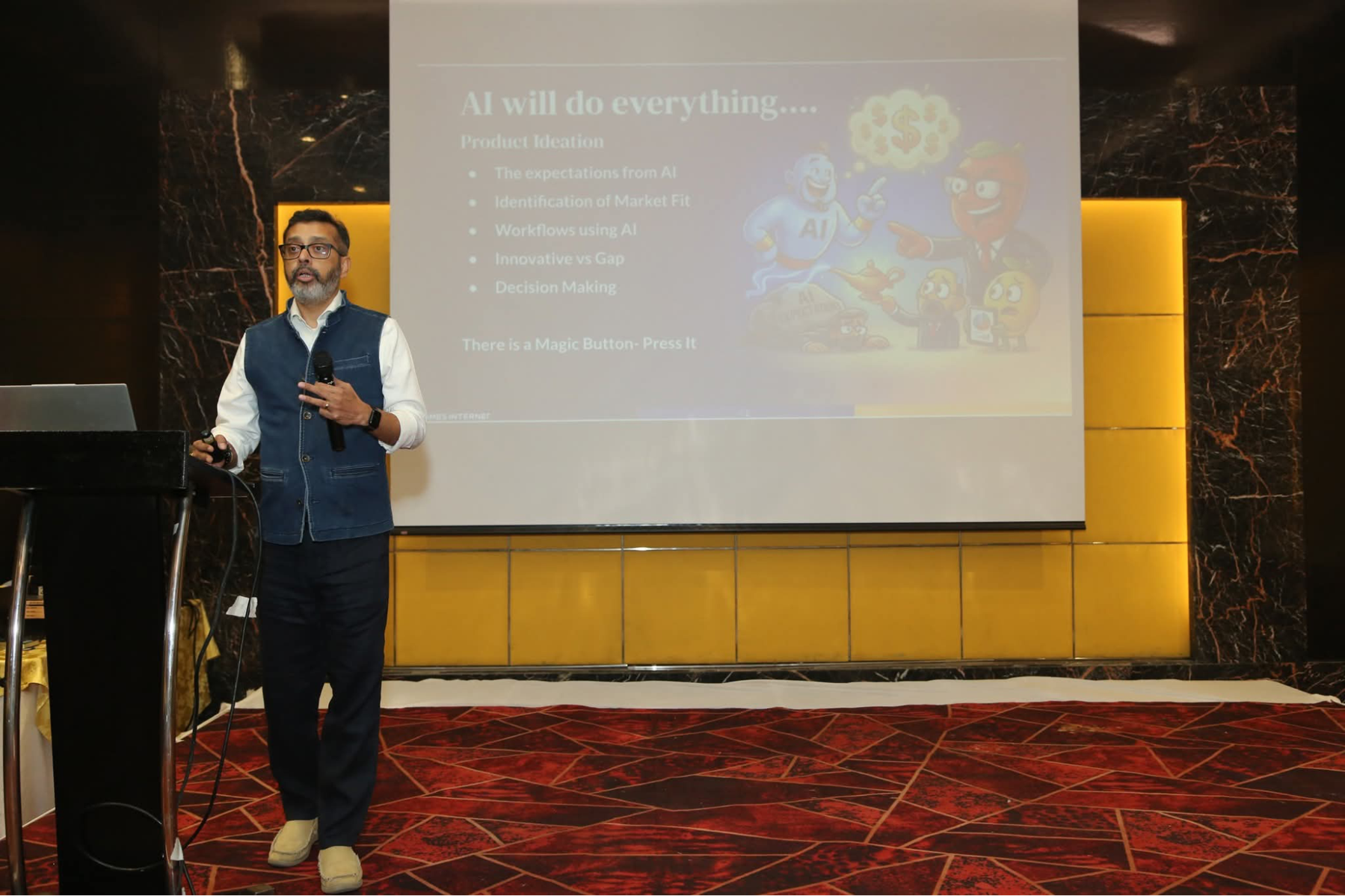
Monetization starts with outcomes, not features
Another important realization was around AI monetization. Adding AI features does not automatically translate into revenue. Customers don’t pay for intelligence - they pay for outcomes.
Some key ideas shared:
- AI features should solve real customer problems, not just look impressive.
- Intelligence can be monetized through premium features, usage-based pricing, or AI-powered insights.
- Customers are willing to pay when AI helps them save time, reduce cost, or make better decisions.
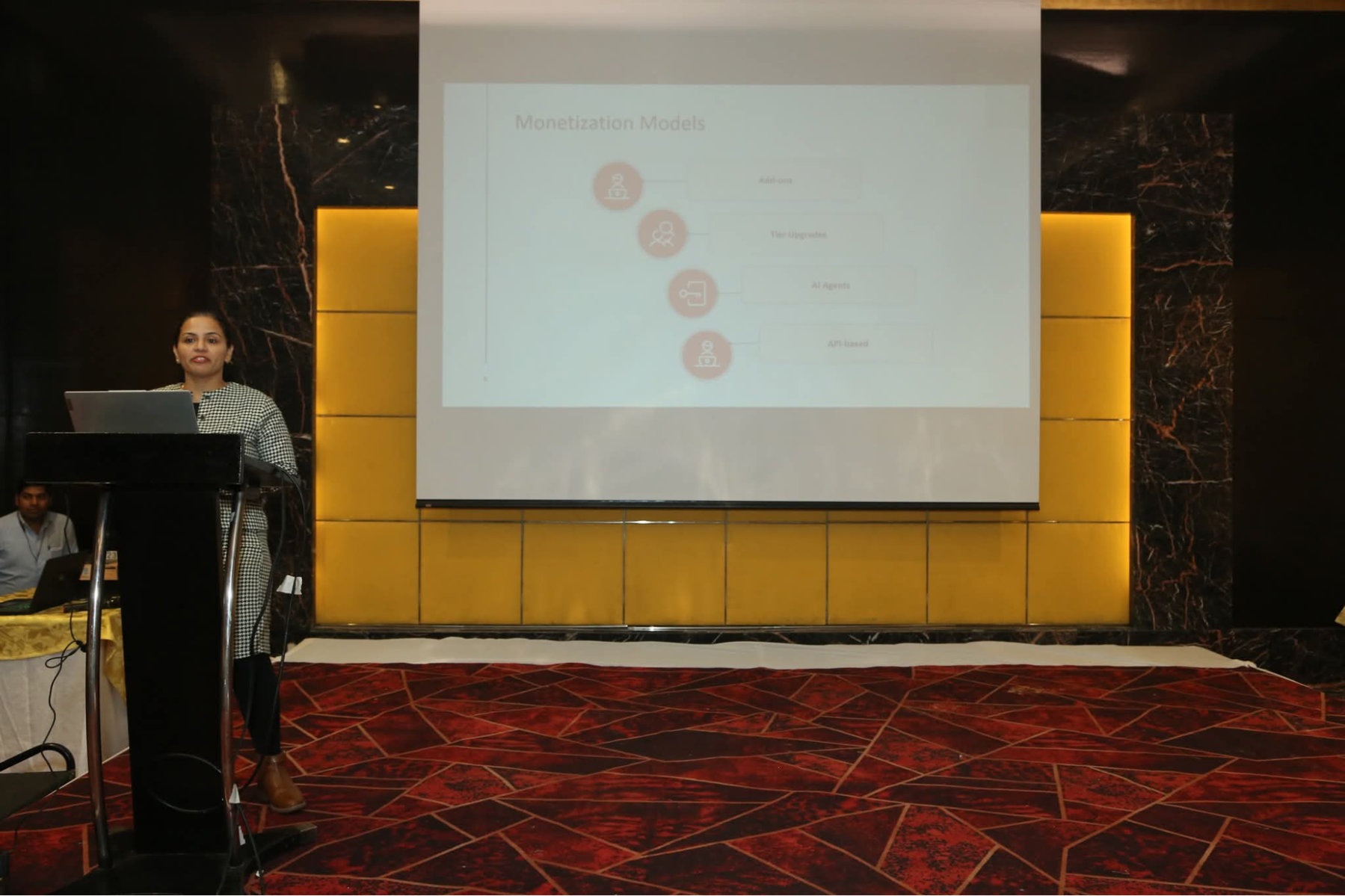
Product teams are experimenting with outcome-based pricing, premium tiers, add-ons, and usage-based models, but always anchored in measurable value.
Product takeaway: If AI doesn’t change a customer’s outcome, it won’t change your revenue line.
The right amount of AI matters
A strong theme across sessions was restraint. While AI can enhance efficiency, overusing it often leads to unintended consequences - confusing user experiences, rising costs, and diluted product value.
Excessive automation can also create “busywork”, where AI generates content that is summarized, reviewed, or validated by more AI. This circular automation gives the illusion of productivity without real impact.
What product teams are learning:
- Not every problem needs AI
- Simple logic often outperforms complex models
- Value should be proven before scale
- AI should be used only where it adds clear value
- Over-engineering with AI can increase cost, slow performance, and confuse users
- Start small, test impact, and scale only when needed
Preparing for an AI-first product world
By Prathana Charkha
Building AI-powered products requires more than just models and tools. Teams need to be organizationally ready. As organizations prepare for an AI first product world, investing in AI ready cloud infrastructure becomes essential for scalability, governance, and performance.
Important focus areas:
- Clean and reliable data
- Clear governance around AI decisions
- Upskilling product managers and teams to work confidently with AI
- Defining accountability - who reviews, approves, and owns AI outcomes
The message was clear: AI success depends on people and processes, not just technology.

Lessons from building an AI chatbot
By Parul
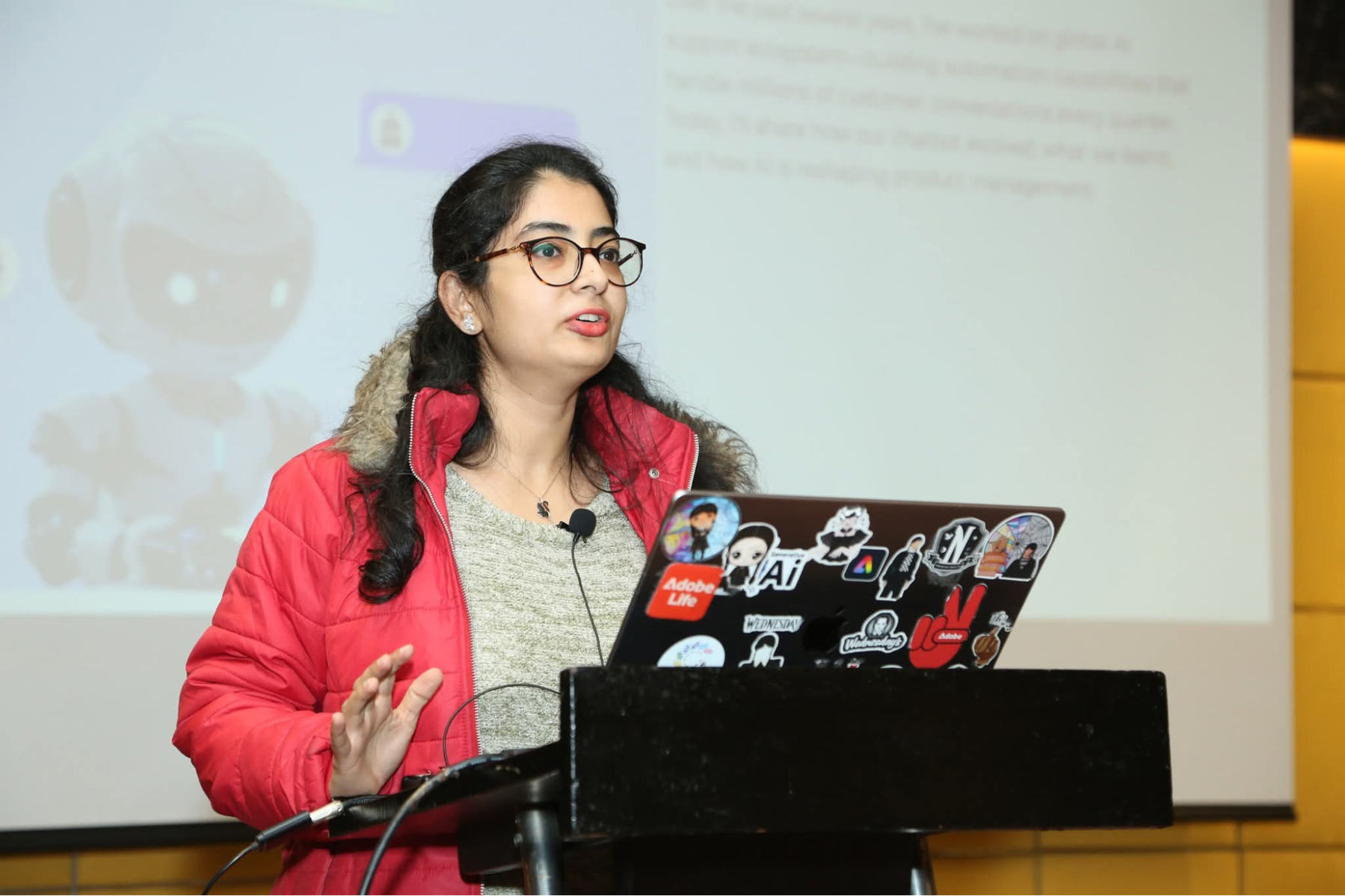
This session shared real-world lessons from building an AI chatbot product.
Key takeaways:
- Understanding user intent is more important than model complexity.
- AI systems need continuous feedback and improvement.
- Product managers must define success metrics like accuracy, resolution rate, and user satisfaction.
- The success of AI chatbot products depends heavily on clean and reliable data, supported by strong data engineering foundations.
AI products need strong product management - not just smart algorithms.
From backlogs to autonomous builders: AI agents in product development
By Deepak Kumar
The final session introduced Agentic AI - AI systems that don’t just respond, but plan, act, and execute tasks.
Examples discussed:
- AI agents that convert requirements into user stories
- Agents that create test cases and track gaps
- Agents that monitor progress and suggest next steps
However, human oversight remains critical. AI agents can accelerate work, but decisions still need validation.
Agentic AI helps scale product teams - it does not replace them.

Key takeaways from the workshop
- AI is now part of the core product operating model
- Human + AI collaboration works better than full automation
- AI should be used with purpose and limits
- Strong governance and clarity are essential
- Product roles (PM, BA, QA) are evolving - not disappearing
What this means for product teams
Across all discussions, one unifying idea stood out:
AI is reshaping product roles, not replacing them.
Product Managers, Business Analysts, and QA professionals who learn how to:
- Ask better questions
- Validate AI outputs
- Balance speed with responsibility
will be best positioned to lead in an AI-first world.
TO THE NEW’s perspective
At TO THE NEW, we believe the future of product development lies in human-AI collaboration. The most successful products will not be those with the most AI - but those with the wisest use of AI.
AI should automate the tedious, accelerate learning, and unlock creativity - while humans remain accountable for direction, ethics, and impact.
The real challenge ahead is not adopting AI, but using it deliberately, responsibly, and in service of real business outcomes.